G7 foreign ministers meet in Paris as Ukraine talks and Iran risk dominate agenda
Europeans want a fair Ukraine settlement and restraint on Iran as Marco Rubio joins two days of talks.
Written with AI assistance from the sources listed below, then checked against them and reviewed by an editor. How our newsroom works
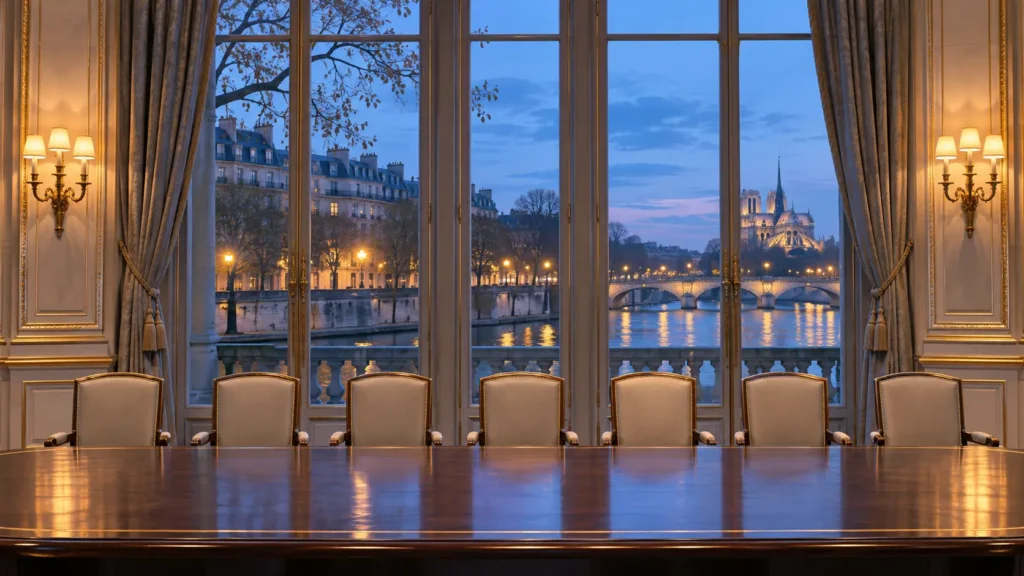
G7 foreign ministers began two days of talks in Paris on Monday, 9 November 2026, with the war in Ukraine and the risk of fresh strikes on Iran at the top of the agenda, Kuwait Times reported. US Secretary of State Marco Rubio is attending both days, on his first foreign trip since the US midterm elections.
Who is at the G7 foreign ministers meeting
Ministers from Britain, Canada, France, Germany, Italy, Japan and the United States are taking part, along with the European Union, Khaama reported. The meeting was planned for Marseille and moved to Paris at short notice, with only scheduling reasons given. It is one of the last events of France’s G7 presidency, and the United States takes over the chair in 2027.
Key numbers
- 2 days: length of the Paris meeting, from 9 November.
- 2 days: US-mediated Russia and Ukraine talks in Abu Dhabi on 10 and 11 November.
- About €500 million: the sum needed to repair the protective dome over the Chernobyl reactor, with just over half raised so far.
- February 2022: when Russia’s full-scale invasion began, now close to its fifth anniversary.
Ukraine: pressure for a fair settlement
European ministers are expected to press Washington for a fair settlement and credible security guarantees for Kyiv, and they worry Ukraine could be pushed into a bad deal, Kuwait Times reported. French Foreign Minister Jean-Noël Barrot said: “Europeans will be represented and France will be in Abu Dhabi to participate in these talks.”
US President Donald Trump has predicted a “very big” deal with Russia covering the Ukraine war and “all of Europe,” which has fed fears of a US tilt towards Moscow. On the sidelines, France’s finance ministry is hosting a donor conference on Monday to repair the Chernobyl dome, which was damaged in a Russian strike last year.
Iran: Europeans urge restraint
Europeans want Washington to hold back from further military action and to help restore normal shipping through the Strait of Hormuz. Kuwait Times reported that Trump has not ruled out new strikes, including on Pickaxe Mountain, a site suspected of nuclear use that Tehran denies is a nuclear facility. Trump said on Friday: “They want to make a deal very badly.”
Khaama reported that Rubio said diplomacy had made limited progress and called Iran’s demands unacceptable. Asked about Republican losses in the midterms, he said: “It is not uncommon to have a division of power in this country.” Background on the country is in our Iran profile, and the economic fallout of high energy costs is covered in our report on the Bank of England rate rise.
What happens next
Attention turns to Abu Dhabi on Tuesday, where US envoys are expected to meet Russian and Ukrainian representatives, and to whether the G7 can issue a joint statement. At the last such meeting in March, ministers dropped plans for a single communique to avoid open splits, according to a Reuters report carried by Aaj. More in our World coverage.
The meeting comes ahead of US-mediated Russia and Ukraine talks in Abu Dhabi and as Washington has not ruled out new strikes on Iran, so its outcome will shape how united Western allies appear on both wars.